Cosmetic dentistry statistics: Market growth, trends, and consumer shifts (2025-2034)
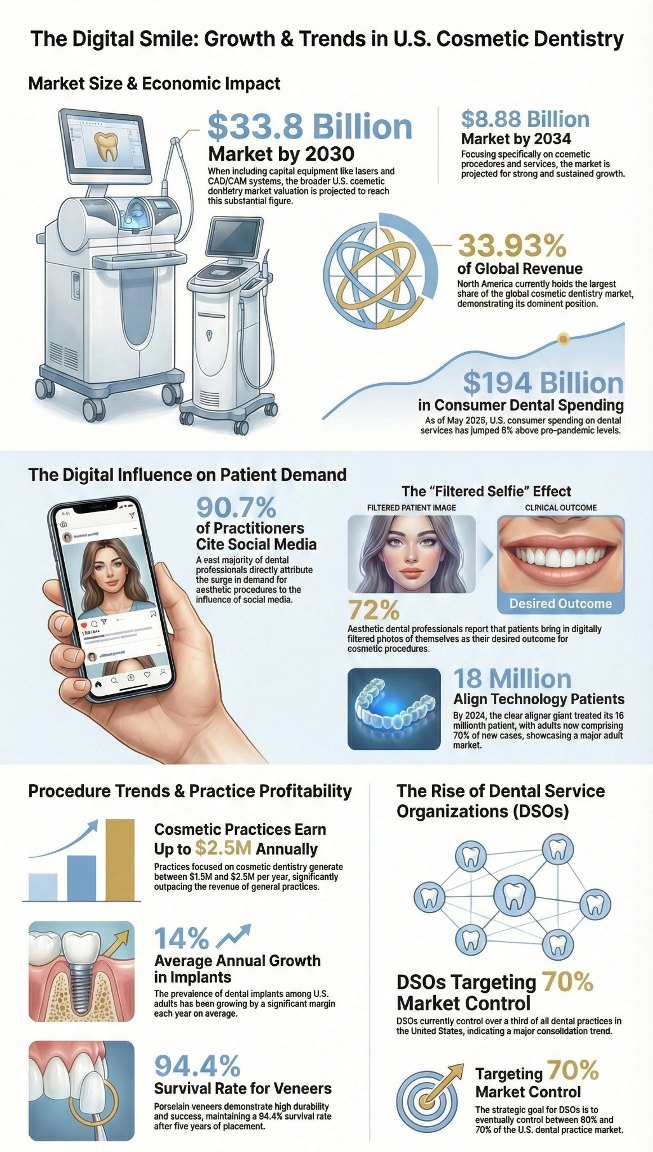
The American smile is being rebuilt in public. Dentistry in the United States no longer remains confined to exam rooms focused on decay and pain. It now overlaps with cameras, hiring decisions, and social media feeds. By 2024, cosmetic dentistry services alone accounted for $4.25 billion in value, but this figure understates the ongoing shift.
Spending is shifting from maintenance to appearance. Practices that sell outcomes rather than treatments earn more, scale faster, and attract outside capital. Teeth have become a professional infrastructure, and patients behave accordingly.
Key statistics
- Forecasts peg the U.S. cosmetic dentistry market at $8.88 billion by 2034.
- Add hardware such as lasers and CAD/CAM, and the broader U.S. market valuation increases to $33.8 billion by 2030.
- North America dominates the global industry, holding 33.93% of total revenue.
- U.S. consumer dental spending reached $194 billion in May 2025—an 8% spike from pre-pandemic levels.
- 90.7% of practitioners attribute the rise in aesthetic demand to social media.
- Cosmetic practices generate $ 1.5 M–$2.5M annually, significantly out-earning general dentistry.
- Align Technology hit 18 million patients in 2024; adults now account for 70% of those new cases.
- 72% of aesthetic professionals report patients trying to match their physical appearance to “filtered” selfies.
- Porcelain veneers have a 94.4% survival rate at 5 years post-treatment.
- Dental implants are becoming increasingly common, with use among U.S. adults rising 14% annually.
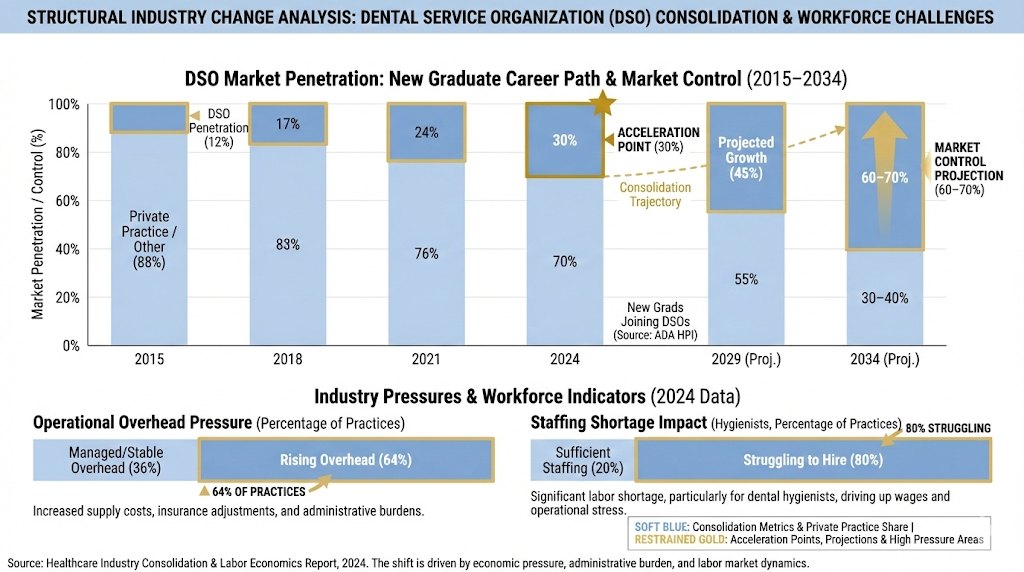
- Corporate DSOs own 35% of U.S. practices today, a figure expected to nearly double to 60%-70%.
How much is the U.S. cosmetic dentistry market actually worth?
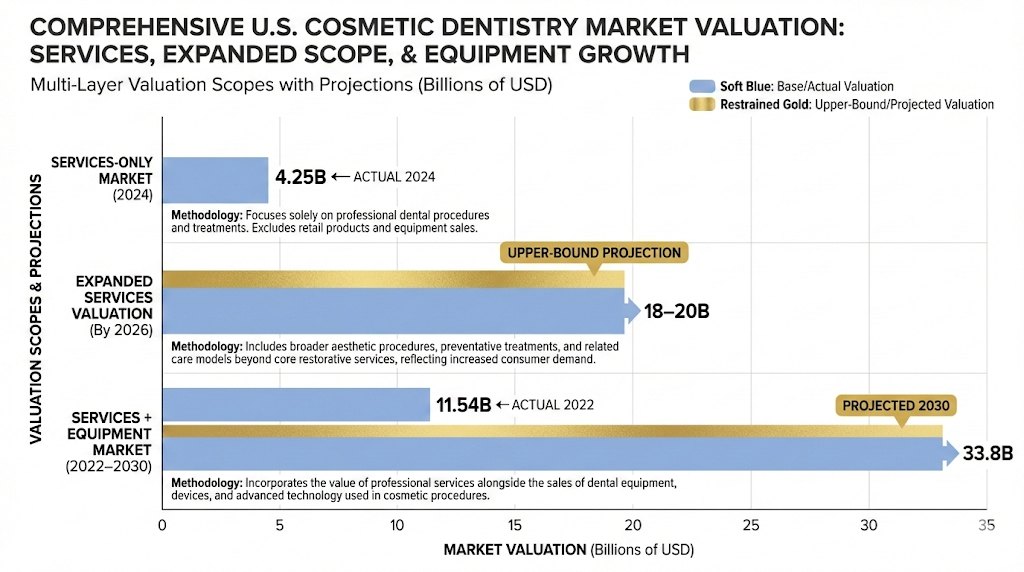
Valuations depend on what you count. Looking solely at services, the U.S. market reached $4.25 billion in 2024. However, broader assessments that account for the full scope of demand present a more comprehensive picture.
The U.S. cosmetic dentistry market was valued at approximately $11.5 billion in 2022 and is projected to reach $18-20 billion by 2026, driven by whitening, veneers, Invisalign, and cosmetic bonding.
But the economic footprint gets bigger with hardware. If you include sales of CAD/CAM systems, dental lasers, and 3D printers, the valuation swells. By this metric, the market stood at $11.54 billion in 2022 and targets $33.8 billion by 2030.
Why does the broader equipment market matter for patients?
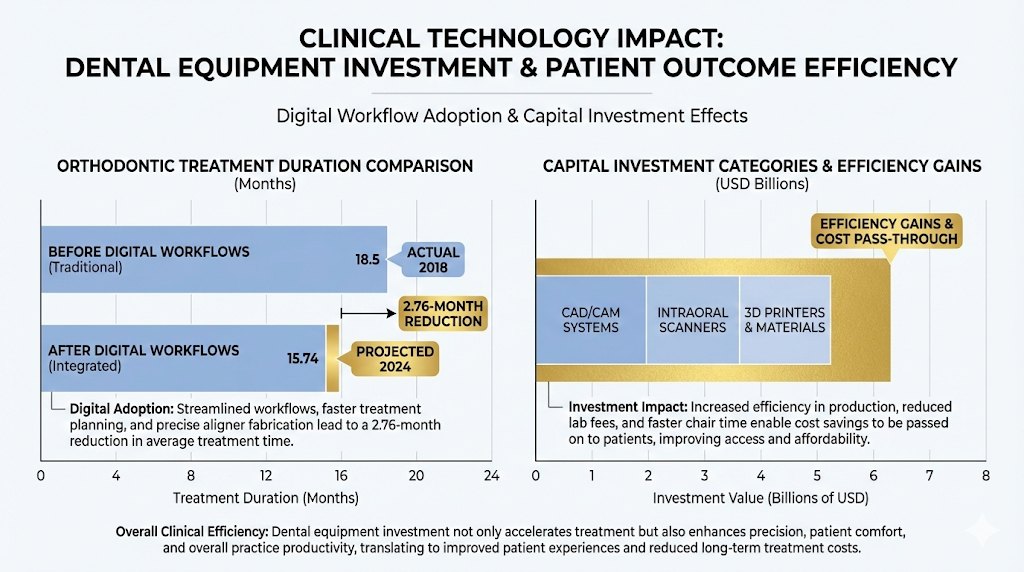
Equipment valuation isn’t just noise; it sets patient costs. Heavy investment means practices are buying chairside CAD/CAM systems and digital scanners.
This tech speeds things up. 3D printing and digital planning cut orthodontic times by 2.76 months. While efficiency helps the patient, the cost to buy these machines trickles down. Prices stay high even if the time in the chair drops.
What is the dominance of the North American market?
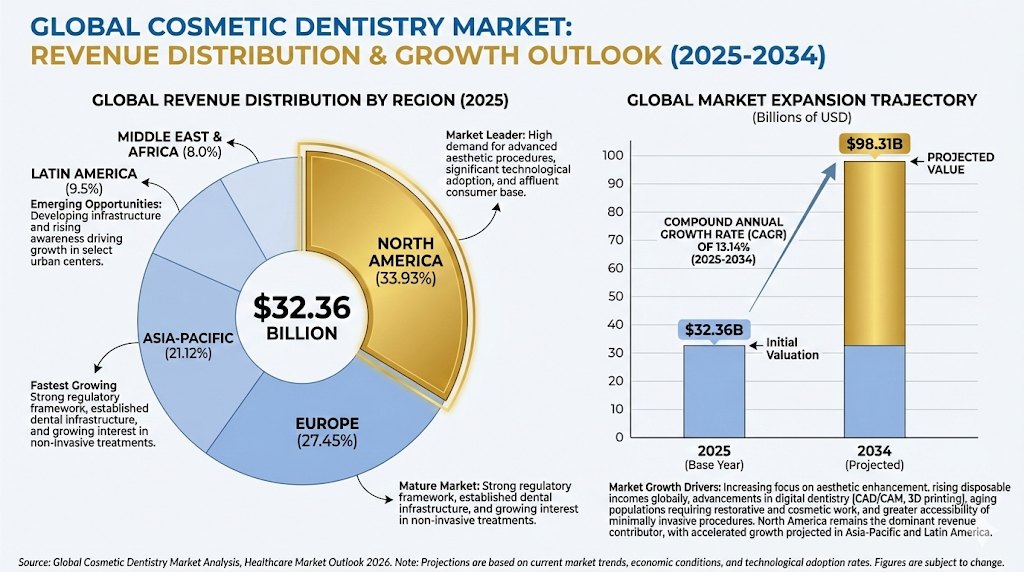
The United States drives the global conversation. North America accounts for approximately 33.93% of global revenue. That global pie is expanding rapidly.
“The global cosmetic dentistry market size was valued at USD 32.36 billion in 2025. The market is projected to grow from USD 35.7 billion in 2026 to USD 98.31 billion by 2034, exhibiting a CAGR of 13.5% during the forecast period.” – Fortune Business Insights
This dominance comes from high disposable income and a cultural obsession with straight, white teeth. Unlike European markets that often favor naturalism, the U.S. demands a standardized, perfected look. This standard drives demand regardless of economic conditions. Consumer dental spending in the U.S. reached $194 billion in May 2025, an 8% jump from pre-pandemic levels.
Who are the “high rollers” in dental spending?
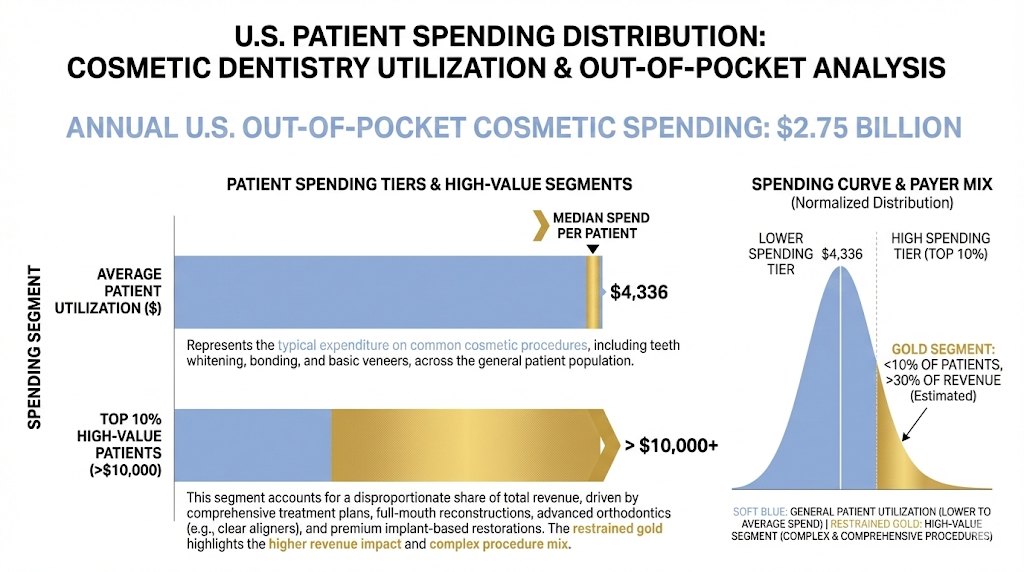
Insurance covers basics. Cosmetic dentistry is a cash game. Americans spend $2.75 billion annually out-of-pocket on elective work.
The average patient spends about $4,336. But averages hide the high-end reality. Data indicate that 10% of cosmetic practices report an average spend of more than $10,000 per patient. This tier involves “full mouth rehabilitations”, veneers, implants, and crowns designed to overhaul an appearance in a few visits.
How is social media fueling “Zoom Dysmorphia”?
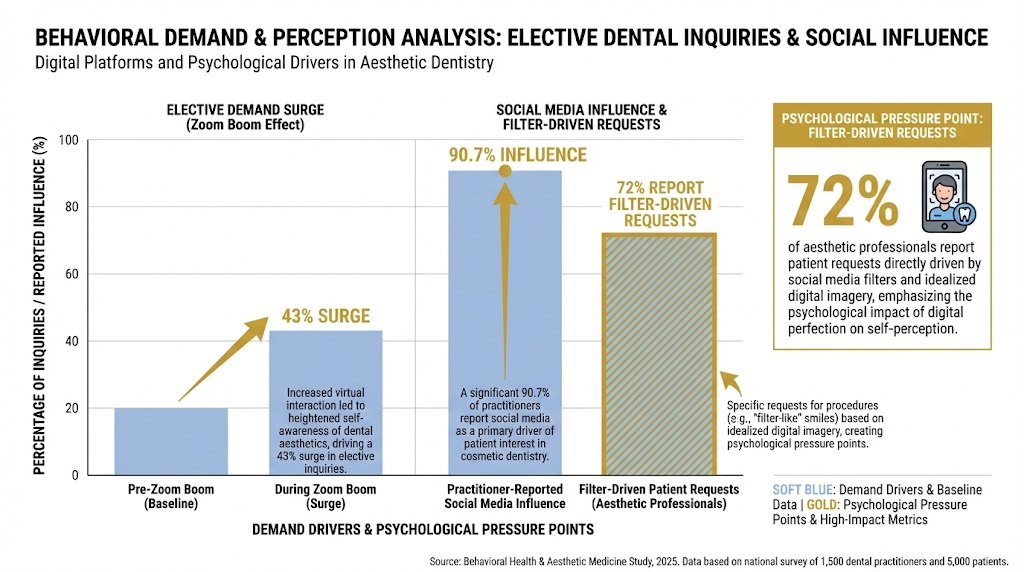
Patients have shifted from restoration to replication. They want to look like their digital filters.
The “Zoom Boom”, born from workers staring at their own video feeds, triggered a confirmed 43% surge in elective dental inquiries. But the pressure evolved beyond video calls.
90.7% of dental practitioners cite social media as the primary driver of demand. This created “Snapchat Dysmorphia.” Approximately 72% of facial aesthetic professionals report that patients request surgical or dental procedures specifically to match their filtered selfies. The gap between digital fantasy and anatomical reality is now a central part of treatment planning.
Are cosmetic practices out-earning general dentists?
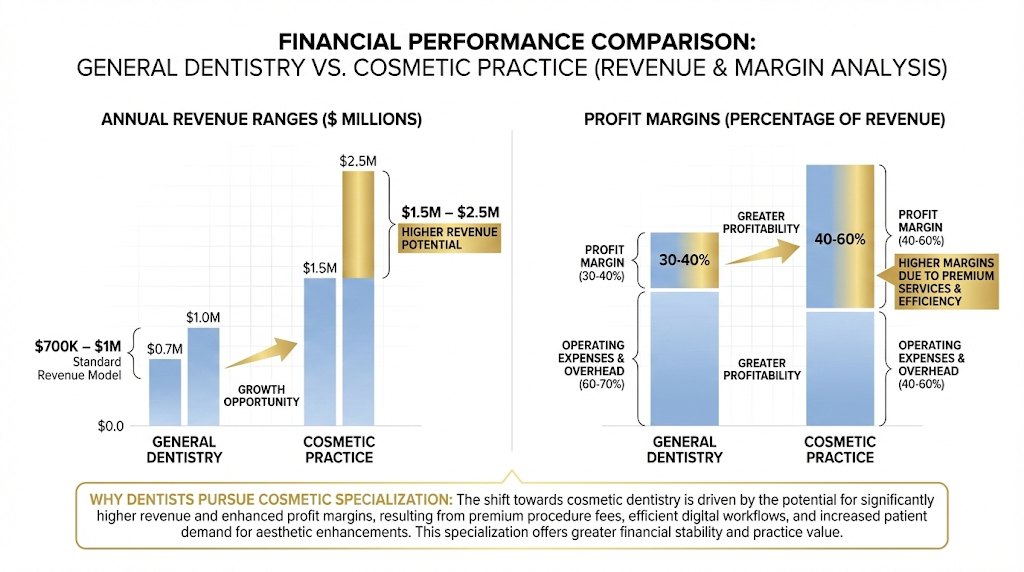
Yes. Aesthetics pays better than health.
Specialized cosmetic practices generate annual revenue ranging from $1.5 million to $2.5 million. General practices typically range from $700,000 to $1 million.
Margins tell the same story. General dentistry operates on 30%-40% margins; cosmetic and orthodontic specialties often reach 40%-60%. This profitability gap explains why general dentists are investing in weekend courses to learn to place veneers. They are chasing the production value that insurance-based dentistry cannot provide.
Is the clear aligner market shifting to adults?
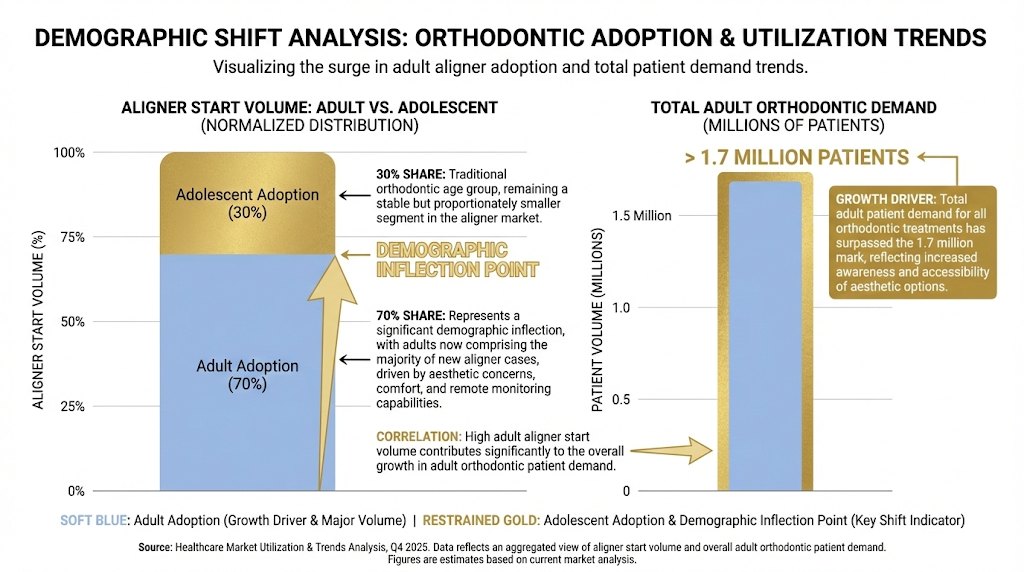
Orthodontics is no longer just for teenagers. The demographics flipped.
Align Technology, the maker of Invisalign, reached its 18 millionth patient in 2024. The critical number: 70% of the start volume came from adults, not adolescents.
Over 1.7 million adults in the U.S. recently sought orthodontic treatment. Clear aligners cost between $3,000 and $8,000, allowing professionals to straighten teeth without the workplace stigma of metal braces.
Does a better smile actually equal career success?
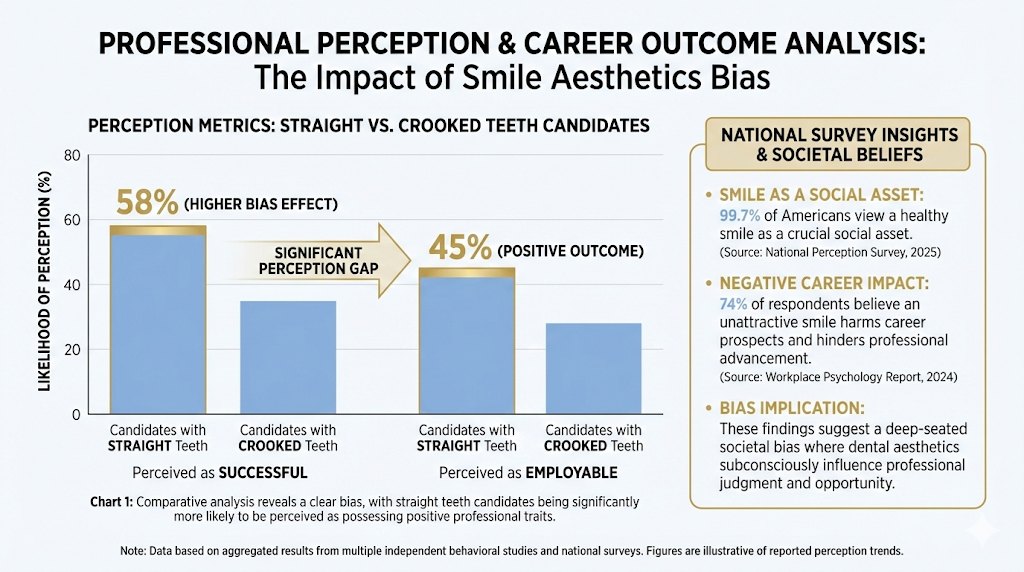
Americans believe the ROI on a smile is financial. The American Academy of Cosmetic Dentistry (AACD) quantifies this anxiety directly:
“Statistics from the AACD also report that 99.7% of Americans feel a smile is an important social asset, and 74% believe an unattractive smile could hurt a person’s chance for career success.” – American Academy of Cosmetic Dentistry (AACD)
Perception studies back this up. Candidates with straight teeth are perceived as 58% more likely to succeed and 45% more likely to obtain employment than competitors with crooked teeth. This bias drives the market for veneers and whitening as tools for advancement, not just vanity.
What are the survival rates and costs of veneers?
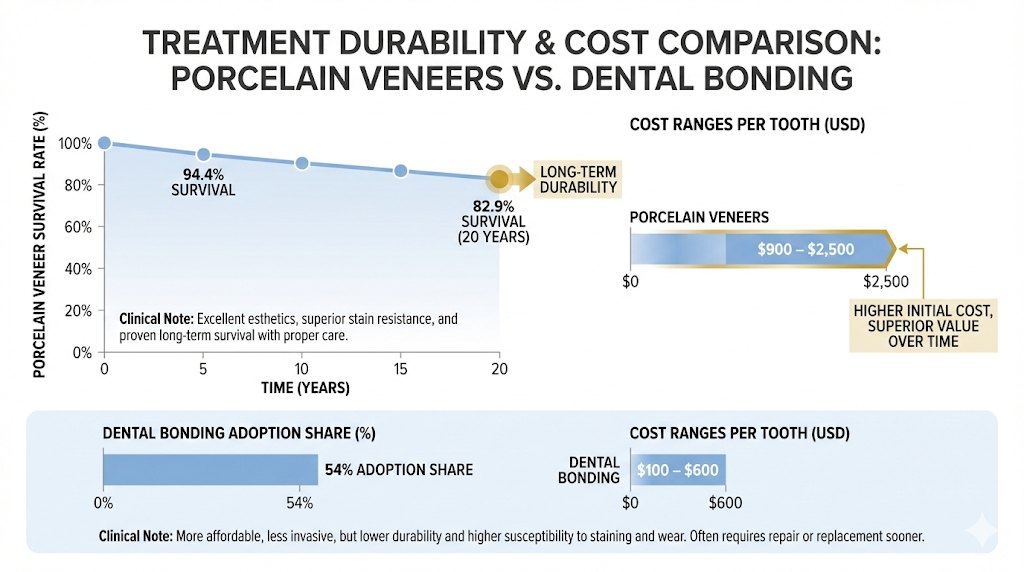
Porcelain veneers dominate smile transformations. The cost ranges from $900 to $2,500 per tooth, depending on region and skill.
Data backs the price. Porcelain laminate veneers have a 5-year survival rate of 94.4% and remain viable in 82.9% of cases after 20 years.
For those unable to afford porcelain, dental bonding is the volume leader. In some surveys, bonding accounts for 54% of all aesthetic treatments due to its lower price point of $100 to $600 per tooth, though it lacks the longevity of porcelain.
How fast is the implant market growing?
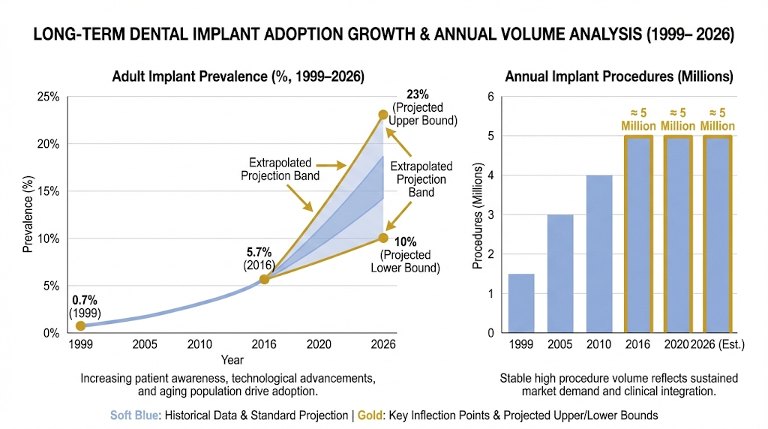
Dental implants have moved from specialist procedures to standard care.
Dentists place approximately 5 million implants annually in the U.S. Prevalence among adults increased from 0.7% in 1999 to 5.7% in 2016, an average annual increase of 14%.
Projections suggest that by 2026, between 10% and 23% of the U.S. population will have at least one implant. With a single implant costing between $3,000 and $5,000, this sector represents a major recurring revenue stream.
How is corporate consolidation changing the industry?
Private equity has noticed the margins in cosmetic and implant dentistry. The solo practitioner is fading.
Dental Service Organizations (DSOs) control 35% of U.S. practices. Market penetration will likely reach 60%-70% within five years.
Overhead and debt drive this shift. 64% of practices reported increased overhead in 2024. Facing high supply costs and labor shortages, 80% of practices struggled to fill hygienist roles, and new dentists opt for employment. In 2024, 30% of new graduates joined a DSO, up from 12% in 2015. This consolidation suggests more standardized pricing for cosmetic services, but potentially less autonomy for the providers.
Frequently asked questions
How big is the cosmetic dentistry market right now?
The global cosmetic dentistry market is valued at approximately $33 billion in 2025. Projections indicate that this market will nearly triple by 2034, driven by rising demand in North America and rapid expansion across the Asia-Pacific region.
Which dental procedures are most popular today?
Teeth whitening remains the most common entry-level procedure, whereas porcelain veneers and dental implants generate the highest revenue. Data shows the dental veneer market is expanding as patients seek durable smile makeover options over temporary fixes.
How does technology improve dental aesthetics?
Modern dental technology, such as CAD/CAM systems and 3D printing, enables faster results. Tools such as intraoral scanners and AI technology reduce failure rates and shorten the time needed for complex implant placement.
Do cosmetic dental treatments affect career success?
Yes. Studies linking smile aesthetics to professional success suggest that improved oral health boosts social confidence. Many patients report better social interactions and psychological well-being after completing a treatment plan for full-mouth restorations.
Is cosmetic work covered by dental insurance plans?
Most private insurance views these as elective, so coverage is rare. Consequently, patient financing and private equity backing for dental practices are increasing to help consumers manage dental spending for high-cost items such as clear aligners.
References
- Cosmetic Dentistry Market Size & Share Analysis – Mordor Intelligence
- Cosmetic Dentistry Market Size, Share & Growth Report – Fortune Business Insights
- Global Cosmetic Dentistry Market News – Market.us
- Cosmetic Dentistry Market Report – Straits Research
- Dental Implant Demand Statistics – Imagine Your Smile
- Digital Dentistry in Action – Wiadomosci Lekarskie
- Social Media Impact on Cosmetic Dentistry – Open and Affordable
- Average Dental Practice Revenue – eDental Market
- United States Dental Insurance Market – Mordor Intelligence