Dental Implants in Des Moines, IA
Missing teeth change more than your smile. They affect how you eat, how you speak, and over time, the shape of your face and the health of your jaw. Dental implants replace missing teeth with a permanent, natural-looking solution built to last. At Des Moines Cosmetic Dentistry Center, Stephen Forrest, D.D.S. plans your implant treatment and completes the final teeth, the part of your smile you see every day.
Implant treatment is a team effort, and Dr. Forrest leads it. He builds your treatment plan and partners with a trusted oral surgeon who places the implant based on his plan. Dr. Forrest then places the final crown, the new tooth you see and use every day. You get the skill of a surgical specialist for the placement and an experienced cosmetic dentist for a natural-looking, comfortable result.
What Is a Dental Implant?
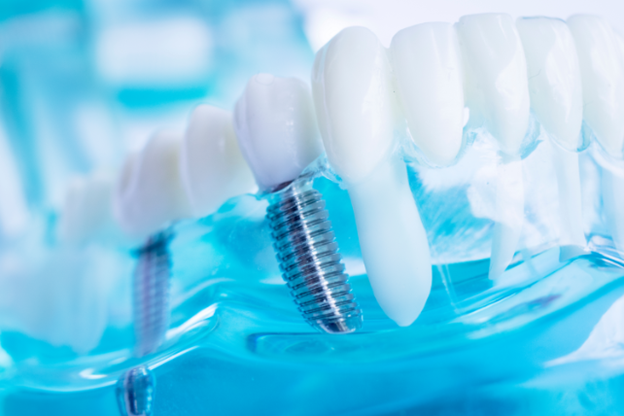
A dental implant is an artificial tooth root, shaped like a small screw, placed into your jawbone to anchor a replacement tooth. The implant fuses with the bone over a few months in a natural process called osseointegration. Once healed, it supports a crown, bridge, or denture, and the result looks and functions like a natural tooth. Unlike a bridge, an implant stands on its own and does not lean on the teeth beside it for support. Studies show dental implants succeed in about 95 percent of cases.
How Your Implant Treatment Works
Getting an implant brings two specialists together, with Dr. Forrest directing your care from the first visit to the last. He examines your mouth, reviews your goals, and builds a complete treatment plan mapping out where the implant goes and what your final tooth will look like.
A trusted oral surgeon then places the titanium implant in your jawbone, following Dr. Forrest’s plan. After the implant heals and fuses with the bone, you return to Dr. Forrest, who designs and places the final crown to complete your smile. This approach gives you a surgical specialist for the placement and a cosmetic dentist with more than 30 years of experience for the part of your smile everyone sees.
“I build every implant plan around the final result, the way your new tooth looks and works with the rest of your smile. A surgeon I trust handles the placement, and I complete the restoration myself. You get the best of both,” says Dr. Stephen Forrest.
Why Choose Dental Implants?
Implants do more than fill a gap. They restore function and protect your long-term health:
- They look and feel like natural teeth, so they blend into your smile
- They stay fixed and never slip, so you eat and speak with confidence
- They restore up to 90 percent of natural chewing power
- They do not damage or depend on the neighboring teeth
- They prevent the jawbone loss following missing teeth
- They resist decay, since the implant itself cannot form a cavity
- With good care, they last for decades
For anyone tired of the limits of dentures, implants anchor your teeth so they stay put. When an upper denture is supported by implants, it no longer covers the roof of your mouth, so you taste and feel your food again.
What Happens If You Leave a Missing Tooth?
Leaving a gap might seem harmless at first, but a missing tooth rarely stays a small problem. The teeth around the gap drift toward the open space, which throws off your bite and makes cleaning harder. The jawbone beneath the gap, no longer stimulated by a tooth root, begins to shrink. Over years, this bone loss changes the shape of your face and makes future tooth replacement more complex. Chewing shifts onto other teeth and wears them down faster. Replacing the tooth early with an implant stops this chain of problems before it starts.
Are You a Candidate for Dental Implants?
Many people have been told they cannot get implants. Today this is rarely true. Health, not age, is the main factor. Patients from their teens into their eighties have received implants successfully. If you are healthy enough for a routine extraction or crown, you are likely healthy enough for an implant.
The second factor is the amount of bone in your jaw. Missing teeth and long-term denture wear shrink the bone over time. If you have lost bone, a bone graft rebuilds enough structure to support an implant, which opens the door for many patients who were once told implants were impossible for them. The only way to know for certain is an evaluation. Dr. Forrest examines the area, checks your bone and your health, and tells you honestly whether an implant is right for you.
The Dental Implant Process
Implant placement is a routine outpatient procedure, and you go home the same day. First, Dr. Forrest evaluates your mouth, takes images, and plans your treatment. At the placement visit, your oral surgeon positions the titanium implant in your jawbone, following his plan. With modern techniques, you keep wearing your existing teeth throughout the healing period, so you never go a day without a smile. Over the next three to six months, the implant fuses with the bone. Once it has healed, Dr. Forrest places the permanent crown, bridge, or denture on top to complete your restoration.
Replacing One Tooth, Several Teeth, or All of Them
Implants replace a single tooth, several teeth, or a full arch. For one missing tooth, a single implant supports one crown. For several missing teeth, implants anchor a dental bridge without altering the healthy teeth nearby. For a full arch, implant-supported dentures snap onto a few strategically placed implants, giving you stability dentures alone do not provide. When you need to rebuild an entire mouth, implants often form the foundation of full mouth reconstruction.
Full-Arch and Implant-Supported Options
If you are missing most or all of your teeth, you do not need a separate implant for every one. A full arch of teeth can be supported by four to six implants, an approach often called All-on-4. The implants act as anchors for a fixed, non-removable set of teeth, giving you the feel of natural teeth without the slipping and soaking of traditional dentures. For many patients, this restores a complete smile in less time and with fewer implants than they expected.
Caring for Your Dental Implants
Implants are simple to care for. Treat them like natural teeth. Brush twice a day, floss daily, and keep your regular checkups. There are no special products and no nightly soaking. Good daily habits and routine visits protect your investment and keep your implant healthy for the long run.
How Much Do Dental Implants Cost in Des Moines?
The cost of a dental implant depends on your specific case: whether you are replacing one tooth or a full arch, whether you need a bone graft first, and the type of crown or restoration. A single implant with a crown costs far less than a full-arch restoration, so the only accurate price comes after Dr. Forrest examines your mouth and builds your plan. At your consultation you receive a clear, written estimate covering both the surgical placement and the final teeth, with no surprises. The practice also offers financing, so many patients spread the cost into manageable monthly payments rather than paying all at once.
Why Choose Dr. Stephen Forrest
Dr. Forrest has transformed smiles in the Des Moines area for more than 30 years. He earned his Doctor of Dental Surgery from the University of Iowa in 1985, holds a Fellowship with the Academy of General Dentistry, and is a member of the Academy of Cosmetic Dentistry, the American Dental Association, and the Iowa Dental Association. He restores implant smiles for patients across the Des Moines metro, including West Des Moines, Waukee, and Urbandale, and combines implant restoration with cosmetic dentistry at the practice in Clive.
“Patients tell me what a pleasure it is to eat the foods they love again and to smile without holding back. Giving someone their smile back after years of struggling with missing teeth is the most rewarding part of my work,” says Dr. Stephen Forrest.
Frequently Asked Questions
How long do dental implants last?
With good care, dental implants last decades, and many last a lifetime. Daily brushing and flossing and regular dental visits give your implant the best chance of lasting.
Is dental implant surgery painful?
The oral surgeon uses anesthetic to keep you comfortable during the placement, and most patients report far less discomfort than they expected. Mild soreness afterward is normal and eases within a few days.
How long does the implant process take?
The implant fuses with the bone over three to six months. Once healed, the final crown or restoration goes on. The exact timeline depends on your healing and whether you need a bone graft, and you keep your existing teeth throughout.
What if I have bone loss?
Often a bone graft rebuilds the structure needed to support an implant, which makes implants possible for many patients who were once turned away. An evaluation tells you for certain.
Are dental implants better than dentures?
Implants stay fixed, restore more chewing power, and protect the jawbone, while dentures rest on the gums and sometimes slip. Implant-supported dentures combine the two, snapping a denture onto implants for far more stability.
Does insurance cover dental implants?
Coverage varies by plan, and some plans cover part of the restoration. The practice helps you understand your benefits and reviews financing options so you know your costs before treatment.
Schedule Your Dental Implant Consultation in Des Moines
A complete, confident smile is within reach. If you are missing one tooth or many, dental implants at Des Moines Cosmetic Dentistry Center give you a permanent, natural-looking solution, planned and restored by an experienced cosmetic dentist and placed by a trusted oral surgeon. Call (515) 516-6769 to schedule your consultation with Dr. Forrest and find out whether dental implants are right for you.